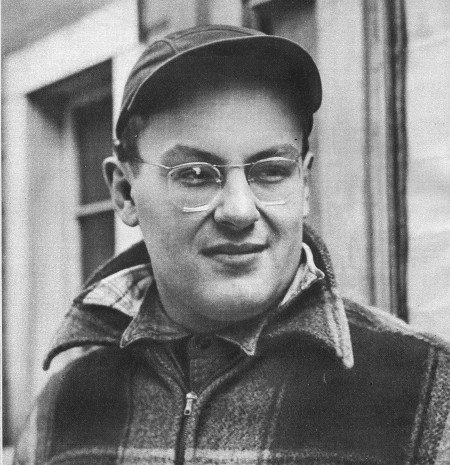
By bribing key All-America stars, Nick Englisis was able to make the scores of major basketball games come out just the way he wanted them. He did it by giving the players what they wanted - cold, hard cash - and all he needed to start with was $350
 |
Published in True Magazine, March 1952, pp. 17-19, 68-72.
by NICK ENGLISIS as told to JIMMY BRESLIN
We'll be under, Nick, don't worry. I probably won't see you until after the game, but we'll be under the point spread. I got Beard and Barnstable to go for it."
The speaker was big stoop-shouldered Alex Groza of the University of Kentucky, then the greatest college basketball center in the nation. The place was my hotel room in Lexington, Kentucky, on a cool February night in 1949.
You see, I gave money to AII-America college basketball players to fix games. Today I realize that I must have been crazy to have become mixed up in the whole rotten business in the first place.
I have a wonderful wife and a hard-working mother who have been hurt by this mess. The newspapers have branded me as a criminal, just a few cuts above a gunman. Actually, I was only a small-time guy with big-time ideas.
I'm telling my whole story, and I'm not going to spare the part I played. My only reason for doing it is to show the process of fixing games, exactly how it is done, and how easy it is to do. I believe if coaches and college presidents know the details they will be able to prevent bribery from corrupting their own teams. Also, the more honest college players know about "the fix," the easier it will be for these players to detect crookedness on the part of their teammates.
I would like to think that the current publicity concerning the nationwide bribery of basketball players will put a stop to this type of crookedness, but I can't be that optimistic, as long as colleges themselves make under-the-counter payment to athletic stars.
I bribed All-America college basketball players to fix games . . . and I did it as easily as you can get the kid next door to run an errand by giving him a dime.
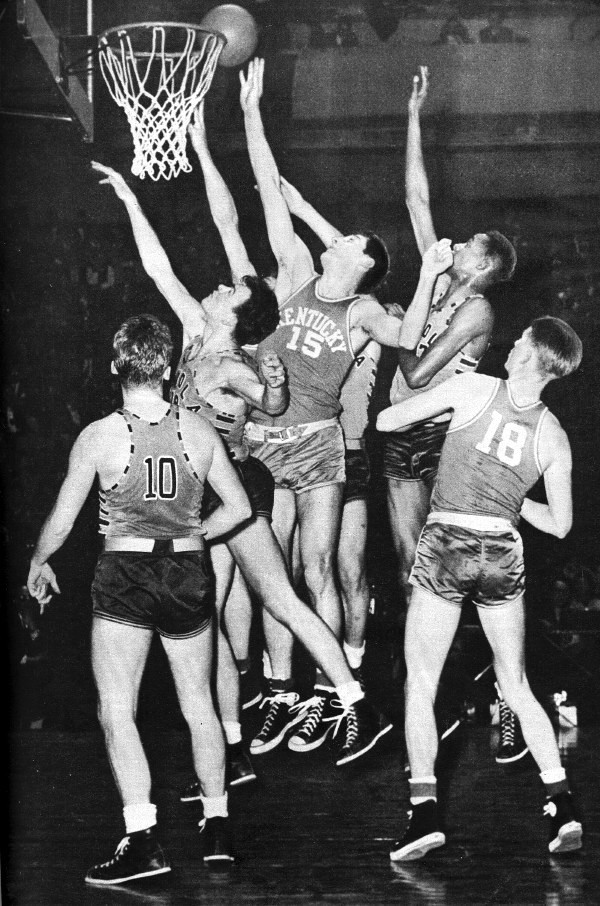
I paid three members of Kentucky's great postwar team, Groza, Ralph Beard and Dale Barnstable-to make sure the final scores of their games would read the way I wanted them.
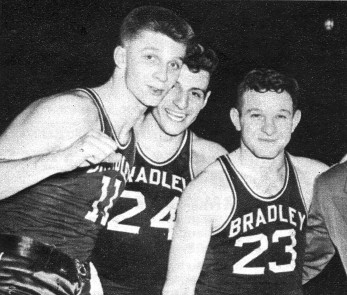
And I didn't have the good sense to stop there. I fixed three Bradley University players-including All-America Gene Melchiorre, Billy Mann and Mike Chianakis the same way.
I was one of the biggest fixers in the scandal which spread to every corner of basketball. My system was simple. I gave the players what they wanted-cold, hard cash. And I began with only $350.
My fixing operations included everything from games in the Kentucky and Bradley gymnasiums to key contests in the National Invitation and National Collegiate Athletic Association tournaments in New York's Madison Square Garden.
And it all began because I was a good enough high-school football player to be offered an athletic scholarship at Kentucky.
I went to Kentucky in the fall of 1944 as a football lineman and I produced for them, playing enough to win major letters in my first two seasons. I played under Coach Ab Kirwan in 1944 and Bernie Shively in 1945. It was through my athletic abilities that I became friendly with Beard, Groza, and Barnstable, who were stars for Basketball Coach Adolph Rupp's powerhouse teams, the greatest in the nation.
I never finished Kentucky for two reasons. One was because my father became ill in 1946 and I had to return home to Brooklyn to help run the family fruit business and the other reason was because I refused to play for Paul Bryant who came to Kentucky from the University of Maryland with a hand-picked team in 1946. He had his players selected before he even saw me practice. I didn't like the way I was being treated, said so and quit the team. The next morning I got a note from the school bursar telling me I was no longer on a scholarship at Kentucky. They follow an "if you don't play, you don't eat" policy at the school.
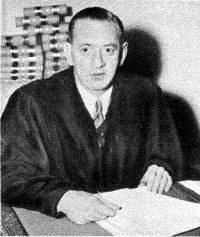
When he pronounced sentence on college basketball players last fall, Judge Streit pulled no punches. "To put it plainly and bluntly, he (the athlete) is bribed in the first instance to choose one college over another. . . My investigations disclosed that most of these defendants before entering college received bids and offers from colleges as far south as Georgia and as far west as California . . . At Bradley we have a typical example of commercialism and overemphasis-with some of its attendant evils: Illegal recruiting; subsidization of athletes; evasion of scholastic standards; corruption of the athlete, the coach and the college official and impairment of the standards of integrity of the college. . . A spot check of fifteen (Bradley) athletes shows that eight were majoring in physical education and among the courses for which credit was given were handball, elementary swimming, social dancing, football and first aid. . . We have just scratched the surface. Four-fifths of the (college) corruption is as yet beneath the level of legal proof and indictment. . ." -Judge Saul S. Streit |
I asked them how they liked the trip and .Beard snapped, "It was lousy. They gave me a fancy blue cardigan jacket and white-duck pants to wear-like I was a kid graduating from high school. They should have cut out that stuff and handed us some money. But I wound up with nothing but a free trip and that Little Lord Fauntleroy suit."
Then Groza started to gripe about the lack of money. One thing he said I'll remember as long as I live. "Money? Yeah, I sure made a lot of money out of all the headlines I made in England. I couldn't buy a beer with the dough I got in the Olympics. "Nick," he said to me, "you used to make money out of basketball, didn't you? You're not even playing the game and you make more money on it than we do." I had met Groza in Madison Square Garden the year before at the Kentucky-St. John's game and he knew I had been betting on the baskets.
"Nick," Groza continued, "you're around New York a lot. You must know a guy some place who can make some money for us. It's my last year here and my last chance to cash in on some basketball. I'm serious."
Alex knew all about the monkey-business that was going on in college basketball. He said Kentucky was a cinch to roll up any score they pleased. I went along with him on that. His club had such a powerhouse that season they should have been able to call their shots against any opponent. What with himself and Beard in charge, I didn't see how we could miss if we decided to rig the games. Beard and Groza, both All-Americans, were each good for 15 or 20 points a game. I knew that if Groza went for it, Beard would, too. They were close friends and were just about the two biggest men on the Kentucky campus. They were national sports figures, and at Kentucky that makes you a bigger man than the school president.
After the meeting on the Kentucky campus we told Groza he'd hear from me soon. The next day Tony and I left for home. A few days after I got back to Brooklyn I stopped off at a poolroom on Sunday and ran into Saul Feinberg, a guy I had gone to high school with. Saul was attending Harvard Law School but he didn't want to go through the slow, painstaking process of getting his law degree. He knew the shady side of basketball and was all for doing business with Kentucky. Then we approached Nat Brown, a pool-hall regular who bet on everything that moved. He jumped at the chance to join in.
"Why didn't you tell me about this setup sooner?" Nat asked. "We could have been in business for two years already! Let's get moving right away. How much money have you got?"
Well, we couldn't raise much dough. We had only $350 between the three of us.
But it turned out to be enough to fix the country's best basketball team.
I went home from the poolroom and did a little hard thinking. I figured that since the arrangements with Beard and Groza would have to be made in person, somebody would have to go down and see them in Lexington. Tony and I were working, Saul was still in school, but Nat was available. He was a natural for the job. He would go to Kentucky and be our agent. We gave him a letter of introduction to Groza, scraped up $40 in carfare and sent him to Kentucky on a Thursday in November, 1948. On the following Saturday afternoon he called and said everything was fine. Groza and Beard were all for it and with them was another player, Dale Barnstable, a tall blond kid. Dale was a nice guy and I always liked him.
But let's get down to the mechanics of the system used to fix games. You see, basketball betting is worked on a point basis. For instance, let's say Kentucky plays State U. The books would make Kentucky a 6-to-8-point favorite. That means if you bet on Kentucky, they have to win by nine and if you bet on State U., they must lose by less than 6 points -or even win the game - in order for you to collect on your bet. The 7-point number is Mr. Inbetween. If Kentucky wins by 7, the bookie collects from both sides.
In basketball betting lingo, an "over" is the bet which gives Kentucky a win by more than 8. An "under" means State U. comes closer than 6 points to Kentucky, or wins the game. To a non-bettor, it seems kind of complicated. It's the code of basketball betting though, and it's the thing which caused an awful lot of trouble. It was easy to get the odds - they were spread all over the newspapers in those days. So, if Kentucky was favored by the 6-to-8 points and they made sure they won the game by only 5 or even less, somebody who knew about it could make a lot of money betting State U by giving Kentucky players cash to make sure things worked out right.
Nat called me back early that night for instructions. Saul and I had sat down in the afternoon and figured out how we could cash in on the bookies' point spread. It was more of a sure thing for Kentucky to win by less than the points the bookies posted-an under-than it was to win by more, an over. Substitutes would pour into the game if Kentucky started to pile up a big winning margin and subs could mess up the works. If we tried for an under, it would be easier, because we thought Groza, Beard and Barnstable were good enough to control a game right down to a couple of points. But we decided to leave all that to the players themselves. We put a pay scale on the game. For an over, we'd give each of them $100. For an under, they'd get $300.
When Nat called, I told him we'd start doing business on the DePaul game at Louisville, Kentucky, on December 8, 1948. Books from coast to coast took bets even on games like that. The big bookie information center in Minneapolis would establish a point scale on each game and it would be wired to bookies all over the country. But if a lot of money were bet in one place on a game like Kentucky-DePaul, they'd get suspicious and "take it off the boards," meaning they wouldn't accept bets because the game smelled bad. I remember when they wouldn't touch a nickel on City College and LIU in 1950.
Nat turned the phone over to Groza. "What about money, Nick," Alex said. He liked the idea of the "pay scale." He'd go over in this one because Beard thought unders were dangerous and was afraid of them. Barnstable was no worry - he'd do whatever they told him. "These overs are terrific," Groza said. "Wait'll the little guy (Beard was a midget compared to Alex) hears about this. He wasn't sure you'd want the overs. It's just like getting a reward for playing good ball. Man, will Beard go wild when I tell him this! He'll be all for it."
The next day I told my father I needed $250 to buy a car and he went right to the bank and drew it out. Pop was easy with money for me because I always gave it back to him in a hurry. I went to a bookie in Brooklyn and got the point spread on Kentucky, 15 to 17. I bet $50 with him on Kentucky to go over. I went to three other places and bet the rest of the money the same afternoon.
 |  |
The phone rang again at 11:30 that night. It was Nat. He just said, "They murdered them, 67-36." We were moving right along. Nat gave the players $100 apiece and I collected the money from he bookies and wired him $400 in the morning for future fixes.
We did five more games after that, and Kentucky went over that point sprcad every time. I'd read about Beard, Groza and Barnstable leading "Kentucky's great Wildcats on tremendous first-half splurges to break the game wide open."
The five overs included Notre Dame, St. John's, Tulane, Vanderbilt and a return game with DePaul. They took place during December, 1948, and January, 1949.
By this time Brown had been hanging around Kentucky so long he should have gone to classes. But Nat played it cute. He never went near the players while Coach Rupp was around. When they traveled, he rode three and four cars away from the team. When they played at home, he ambled into the gym with the students. He always met Groza, Beard, and Barnstable off campus.
On the home front in Brooklyn, Tony and I started to live a little better. We didn't start hitting the big-time night clubs with chorus girls or anything like that, but we did start buying some good clothes. No flashy trimmings, either. If we saw the suits in the New York Times, we'd buy. Strictly class, Brooks Brothers stuff. Those loud bookie clothes weren't for us. We went in for good solid suits, like gray flannels. And if I went out on a date, I'd always grab a cab. But most of the money went into the bank for future operations.
I took a trip to Kentucky early in February before the traditional game with Tennessee. I stopped at the Phoenix Hotel where Brown was staying, and Groza dropped in the night I arrived. He wanted to talk more business.
"Nick," he said, "I'm not making enough money the way we're doing things. I want more. I want to go under on the Tennessee game. What do you say?" I said it was fine with me but that I was leaving it up to him. "I'm going under," Groza asserted. "Beard may be scared. If I can convince him, we'll have it made. If he goes with me, we can do anything. I'll go and talk to him now and let you know. He wants money bad - he'll do it," Groza added. Abruptly, he got up and walked out of the room.
Half an hour later Groza came back. "We'll be under, Nick, don't worry. I probably won't see you until after the game, but we'll be under the point spread. I got Beard and Barnstable to go for it."
Brown and I stayed at the hotel that night and listened to the game on the radio because tickets were not available. I called my brother in Brooklyn and told him to make a bet on Tennessee at the points, Kentucky being the 18-point favorite. Tony said he'd bet $1,200. Kentucky just did make it - 71-to-56. They really had to hold things down.
I saw the papers the next day. They said Beard hurt his ankle, scored only 6 points and fouled out after fifteen minutes. But Groza scored 34 points for a new Southeastern Conference record. With Beard out, the others fed Alex, who scored plenty, but made sure it was just enough to stay under the spread.
Feinberg mailed me a nine hundred dollar check from New York and I paid off the players. Things were going fine now. After the seven fixes Tony and I had a profit of $8,000 for ourselves. But I was riding for a fall.
We were really high when the slide toward the district attorney's office began. The chutes started getting greasy in the National Invitation Tournament at Madison Square Garden in March of 1949. We thought the tournament was the spot where we were going to hit the real big money because Kentucky was entered and favored to win.
We got a room in the Hotel Paramount in Manhattan so we could be close to the situation all the time. That's where Madison Square Garden puts up most of its tournament teams.
The Kentucky-Loyola game was to be played as part of a Wednesday-afternoon opening round doubleheader of the National Invitation tournament. The drawings put Kentucky in the seeded half and had Loyola unseeded. Loyola didn't figure to beat Kentucky-and nobody else did, either. Kentucky was being touted as a superteam. They were entered in the National Collegiate Athletic Association tournament which held the Eastern finals at the Garden, too, and were expected to win both tourneys and make a basketball "grand slam."
Groza came into our room with Beard and Barnstable the day they arrived. By now they were three anxious guys. They had the whole tournament planned. They were going to make a bundle the whole way. We agreed to pay them $500 apiece for the Loyola game.
But the entire affair backfired. Groza had been reading about himself in the papers too much and began thinking he was the Ted Williams of basketball. He could do everything, or so he thought. He figured that with the other two playing straight man for him, he could make or break the whole affair. How he talked that day.
"Nick," he said, "everything is set. We'll go under in every game. Nobody looks tough, so it won't be hard. Look what the papers are saying. They say we'll romp all the way. And so do I. This is it, brother. This is where I make a killing." Groza emphasized the "I" and although Beard and Barnstable didn't notice it, I did-and so did Brown. I caught his eye. Something was going on.
As the boys left, Beard quipped, "I'm going to be able to buy all the gum they can make. And will this bust up my oId man's 'make your money the hard way' lectures." Beard was always chewing gum and during a game he must have used up two packs. All you ever saw of him was whirling arms and legs and that jaw punishing the gum. (JPS Note: In a newspaper article (Indianapolis News, February 21, 1952) in response to this, Beard bitterly noted, 'My dad and mom have been divored since I was six. I have seen him only twice since then - once when I was in the finals of the state high school tournament. The second time was just before I went to college. At no time did we talk about anything like that. A dad would trust his son that much.')
Feinberg, nodded toward the door after they left. 'He'll be back in twenty-two seconds flat. He wants something, that Groza. All out for the four forty," Feinberg yelled out jokingly, meaning Groza would be back running-and fast.
He was.
"I want to talk to you and I want it kept on the QT," he told me. "I'm the big boy on the club, let's face it," Groza said. "They couldn't do a thing without me. I'll give it to you straight. I want $500 more than the rest are getting or I won't do business. I'm not kidding and I want it kept quiet."
'We couldn't argue, so Nat told him it was his.
"It's okay by me," I said. "You name it, 'you've got it, but the extra $500 is the most we can go." That satisfied him and he left after we promised him the other players would never know about it. "You know," Nat said to me after he left, "he's the greediest guy on two feet. Why he'd double-cross Beard and Barnstable without thinking."
We went to the Loyola game that afternoon. Our seats were in the side loge. "They were the green-colored seats-and I mean green, because that's where the big boys who did business on games always sat.
We certainly were in heavily enough on this one to sit there. We put $6,000 down with Eli Kaye who was our regular bookie then, betting on Loyola to win at the points. We had been hitting Kaye so much, we thought he began to suspect us. But he took the money. Kentucky was an 11-to-13 point choice.
It was close all right. So close that Loyola won the game, 67-56. After keeping a few points behind Loyola all the way, Kentucky tied it up in the middle of the second half. But then a couple of Loyola guys. . . Nichols and Bluitt, their names were. . . got hot with the set shots and Jack Kerris, the guy Groza was guarding, started to take liberties with Alex because the big guy was charged with four personal fouls. One more and Groza would be out of the game.
Groza realized everything was wrong - that Kentucky might lose - and he'd lose his chance to make money all the way through the tournament. In the National Invitation Tournament one loss eliminates you unless it comes in the semifinals. Then you playa consolation game.
Alex started to get active, but the first thing he did was to foul Kerris. That was it. The crowd roared when he fouled out, because now Loyola was a cinch to win.
 |
"Look at Groza . . . boy, he's crying, he sure must feel bad about this one;" a guy sitting a few seats from me said to his girl. He sure did feel bad. Not because Kentucky was losing, but because he apparently had lost a chance to pick up more money on other games.
Beard and Barnstable tried to make up the deficit late in the game, but then Beard fouled out and walked off the court chewing his gum like a piston. He sat down and kept his head on his chest. I guess he also was counting the dough he lost. (JPS Note: Beard did not foul out of this game.)
Tony, Saul and Nat went out after the game to collect our $6,000. I went back to the hotel and was thinking about what we were going to do now that Kentucky was out of business.
Kentucky still was in the N.C.A.A., but we had the rest of the Invitation to go and by now I was getting too used to picking up quick cash. I didn't have the sense to stop. I started figuring out a way to make some more in a hurry. If Kentucky had taken it so readily why, hell, so would everybody else.
I started thinking and remembered noting to myself during the Bradley University-Western Kentucky game, played before the Kentucky affair that afternoon, that Mike Chianakis on Bradley was Greek.
Then Tony, Saul and Nat came back and Tony mentioned that little Melchiorre was right down the hall from us. "He's some ball player," Tony added. Gene Melchiorre had scored 28 points for Bradley that day. Even though he was a little guy, 5 feet 8 inches tall, he was a terror. I began to think in terms of Bradley right then.
"Tony, stay at the door. If Melchiorre leaves the room, let me know. I want to make sure I accidentally meet him in the hall," I said. Tony watched for a while and an hour later he motioned to me. I put on a jacket and walked out into the hall. Melchiorre had Chianakis with him. I was going to set things up for later, but I took a flyer and said, "Tikanis" (how are you) in Greek to Chianakis, hoping he understood the language. He smiled and started talking to me in Greek. If you know anything about a Greek speaking the language to another Greek, you know what a hit I made with him.
I asked them to step into our room. Inside, Tony joined in speaking Greek. After five minutes we owned Chianakis. We talked about the Loyola game they were to play next, and Melchiorre said he thought they could beat Loyola. They left after a few minutes and we all bet a friendly wager of $100 apiece on Bradley at the points.
Kaye handled the money and needled us, "Kentucky's out, so you guys stop business?" He smiled, but we knew then he was getting the idea. But he was the only one who was. We didn't make any big show of our deals. We played it smart from start to finish. Nobody knew what was going on. Big-time fixers were all over the place, trying to get to everybody. But the out-of-town players were afraid and stayed away from them. So the New York smart boys had to stick with the city teams they had locked up all season. Groza and Beard dealt with us because they didn't want to get mixed up with the big-time gamblers.
Bradley lost the Loyola game and we saw Melchiorre, Chianakis, and another Bradley player - Bill Mann - again on Friday. "You want to make some money on the consolation game?" I asked Melchiorre. (Bradley had reached the semifinals of the N.I.T. and would play one consolation game.)
Melchiorre jumped at the chance. "You bet your life," he said. "What do we do and how much are you guys giving us for it?" I expected a favorable reaction from him but nothing like that. This guy is the easiest of them all, I said to myself. We told them the setup was for Bradley to go under and gave them the same deal we gave Kentucky - excluding the $500 we slipped 'Groza.
Melchiorre said he didn't think Bradley could beat Bowling Green, their Saturday-night opponent in the consolation game, because Bowling Green was too good and "it's just a punk consolation game anyway, so we might as well really lose the thing and make a buck."
And that contest was where we got murdered. Paul Unruh, a Bradley star who wasn't in on the fix, played a tremendous game against Bowling Green. No matter how hard Melchiorre and the others tried not to score, Unruh brought Bradley to within 5 points. Bowling Green won, 82 to 77. Bradley had to lose by 8 or more points for us to collect.
We had bet $5,000 with Kaye on the outcome and all of it was gone. I felt like shooting myself. After the game I sat in my seat for a full hour before being able to move.
But the next day we were figuring how we could rig the N.C.A.A. tournament. We hadn't seen Groza, Beard, and Barnstable since the Loyola fiasco. It was time for the N.C.A.A. tourney to get under way and we figured it also was time to contact Groza again. We hoped we could make up some of the losses suffered in the N.I.T.
Kentucky was paired with Villanova in the opening round and was a 14-point favorite. We were figuring on an under but it turned out that the Loyola game had made Beard a little less hungry for quick money.
"We have to go over, Nick. I'm sorry," Groza said. "The little guy (Beard) and Barnstable are worried about losing that one too. They're afraid somebody might get wise to what we've been doing. But we can pull an over. I'll score 50 points against this guy Arizin." Villanova's big star was Paul Arizin and all the papers were comparing him to Groza as a scoring threat.
We needed money, needed it badly after getting belted in the Bowling Green deal, so we agreed on an over. Saul, Brown and I fired the whole bankroll- $3,000 - on the game, trying for a good killing.
Well, Arizin is a big pro star now and, I don't think there's a guy in the world who can make a bum out of him. Oh, Groza got his points that night, 30 of them. But the trouble was, so did Arizin. Kentucky won all right-by 85 to 72, one lousy point under the 14-point spread. One lousy point which kicked us out of the fixing business. It broke us. I was on pins and needles all the way down to the final minutes of the game. Kentucky tried like blazes to go over. They fed the ball to Groza and he'd score. But Arizin was doing the same. He ruined us.
After the game I remember seeing Groza, Beard, and Barnstable a few blocks from the Garden. We said "so long" to Beard and Barnstable and shook hands with them. Groza just looked dazed. He must have been counting the money he lost. Maybe he wanted to count mine, too. I was left with a crisp ten-dollar bill in my wallet.
I gave up all thoughts of basketball until August of 1949 when Eli Kaye called me. He had a proposition and I listened to it. "I know you guys had Kentucky in the bag and I knew you were doing things with Bradley even before that bet you made," Kaye told me. "I'm going to get myself into the picture next season and I want you to handle things for me. If you can set up Bradley, I'll bet for you and pay your bills. I want you to stay with the players, get next to them," he continued. "I'll pay you big money," he promised. "Are you game?"
I said "sure" without even thinking the thing over. I had a chance to refuse but by now, I was really playing it like a fool. So Kaye and I packed up and went to Peoria, Illinois, where Bradley is located.
I introduced Kaye to Melchiorre, and Bradley's star player took to him right away. "We can make a lot of money for each other," he told Kaye. This Melchiorre was something to see. He came from average circumstances but he had Wall Street ideas when it came to money.
Kaye paid the fixed Bradley players $1,500 per game-giving the money to Melchiorre and letting him split it up among the guys in on the deal. We began by shaving points on the Washington State game at Peoria on December 21, 1949.
We also did business against Manhattan at the Garden on January 12, 1950. The Manhattan game turned out to be a lulu. Jack Byrnes and Hank Poppe-the two Manhattan stars who have since been arrested-were out to dump the game and our Bradley boys were trying for an over. Of course, the Manhattan players were being paid off by another group of fixers. They knew nothing about us and we knew nothing about them. The contest turned into a rout, Bradley winning 89-67.
I played it the same way Brown did at Kentucky. I talked to Melchiorre only when he came to downtown Peoria. I never went near the school.
Before the Bradley-Manhattan game I called my brother to see how things were at home. Tony told me Jack West had been hounding him. West was a big shot in the bookmaking business. He was one of the master fixers until District Attorney Frank Hogan grabbed him.
West told Tony he knew I was doing business and that he'd pay for any information Tony would relay to him about Bradley. Kaye had been sending me up to $300 a week for my part in the deal, but I was dreaming about the money I had once had during the previous season. Any added dollars would be very welcome. I was all for it. "Tell West to get some money up in a hurry, and that you'll call him the afternoon of every game we do business on," I told Tony. He called me back and said West went for it in a big way. So I called Tony with the information before every game. We delivered and so did West. I got money orders from Tony for $400 to $500 apiece.
But one thing disturbed me. Tony told me that a guy named Joseph Benintende gave him the money once instead of West. I knew Benintende had a reputation as a gunman and bank robber. Later, he was to be questioned in the murder of Charley Binaggio, the Kansas City racketeer. He was the last guy I wanted to get mixed up with. But when I saw the money coming in steadily and in good chunks, I decided I didn't care who West did business with.
The St. Joseph's game at Philadelphia's Convention Hall on January 14, 1950, was rigged as an under for Bradley. Kaye let me know about it at 4:30 that afternoon and I put in a fast call to Tony to service our little relay system to West.
But Kaye came to see me in my hotel room at about 6 o'clock while I was dressing for dinner. "Somebody has been cutting in on this deal," he snapped, "and I'm going to teach the guy a lesson. There's been a lot of money bet on St. Joseph's for this one. That means somebody heard something they have no business hearing. I'm not saying it's you, but "I'm warning you the guy who's responsible is going to get his hands burned bad. Tell that little character Melchiorre that it's an over this time. Tell him to get out there and keep scoring!"
I called Tony fast and told him about the switch. He said he'd get to work on it and I took off for the ball game. I grabbed Melchiorre outside the player's entrance to Convention Hall and told him to go over.
Bradley was in the second game of a doubleheader. In between games, the loudspeaker called for a "Mr. Nicholas Englisis" to report to the head usher's room. The guy in the usher's room said there was an important call for me. It was Tony.
"Nick, you better do something for me fast. When I called West it was too late for him to switch his bet," Tony blurted. He sounded like a little scared kid. I told him he had better duck fast, but Tony cut me short: "That's what I mean Nick, he's got me. I'm in his apartment now and he says you better do something fast or he's going to give it to me good." Then West got on the phone. His voice was hard and cold. "You better fix this damn thing up, Nick, I'm telling you, or I'll give your brother a kicking around. I'll kick the hell out of him unless you take care of me. I've got a lot of money down on this game and I'm not going to lose it because of a punk like you and those lousy college kids. Tell those bastards that I'll pay them to go under,"
I almost keeled over. I started begging West, "Please, please Jack, I'll straighten it out, but leave Tony alone." He said he'd give me ten minutes to call him back and then he slammed the receiver down. I turned and sprinted out of the office, bumping into people all the way to the court. It was just before game time and Bradley was almost through warming up. I tried to get Melchiorre's eye. He was under the basket tapping in rebounds. He turned and saw me, grabbed a ball and walked into a corner of the court. I turned my thumb down-meaning they were to go under the point spread-and looked straight into his eye. He nodded, smiled, and then turned around and flicked up a set shot.
Melchiorre was a cool customer. The following season it was reported he tried to sell West on the idea of rigging a series of ten to twelve Bradley games for $4,500 per game. I knew Gene would follow my new instructions. He wanted that extra money for going under the spread.
I didn't want Kaye to spot me, so I left Convention Hall and went into a bar across the street. I called West and told him everything was okay. He said he would wait until after the game and then let Tony go. Then I walked down a few blocks and slipped into another bar where they had a radio on. I heard the halftime score on a news broadcast. St. Joseph's was ahead. An hour later some people came in and started talking about what a good game it had been. Bradley had won, 64 to 60, after being favored by eight points. It had been a close call for my brother.
I haven't seen Kaye again since that night. He lost heavily on the Bradley-St. Joseph's game but never tried to give me any trouble. As for me, $22 was all the money I had in the world when I left Philadelphia's Broad Street Station and returned home to Brooklyn.
That hectic game ended my connection with the fixing business-until that afternoon last July 24 when two detectives from Hogan's office came into my home and picked me up.
The D.A. had investigated Kaye's phone bills and had traced me through a collect call I had made from Peoria to New York during our Bradley operations.
Brown, Feinberg, Tony and I are in a jam today - a bad jam. So are the other fixers and the players. Salvatore Sollazzo, who bribed CCNY, LIU, Toledo and NYU players, received a prison sentence of from eight to sixteen years. Sherman White and Eddie Gard of LIU are in jail. So are Ed Warner of CCNY and Connie Schaff of NYU. Al Roth of CCNY also was given a prison term but actual service of the sentence has been postponed due to an illness in his family. Melchiorre, Mann and Chianakis received suspended sentences last December.
Would I do it again? Not if you knew how I feel today. Not if you could have seen my mother's face the day I was hauled off by the detectives. There's nothing you can do now but talk, tell the district attorney everything you know, bargain for your freedom and take the black mark you'll have on your record for the rest of your life.
But maybe there's somebody else to blame besides myself. Last October when Groza and Beard were brought into the police station in Chicago - they had just attended an exhibition basketball game - and booked for their part in the mess, Alex turned to the reporters who were swarming around trying to get near him. "Someday," he said, "when I'm old and gray, I'm going to write a book about how Kentucky got me to go to college." Groza was a high-school basketball star at Martins Ferry, Ohio, and the bidding for his services went pretty steep. (JPS Note: UK was the ony school to offer Groza a schorlarship.) One day he turned up on the Kentucky campus with a new car. I know he didn't buy it with pennies from his piggy bank. (JPS Note: Groza objected to this after this article was publsihed, saying that his brother, Hall of Fame pro football player Lou Groza loaned him $1,000 to buy the car.)
Beard, Groza and I were registered in the same physical education courses at Kentucky. They took "basketball technique" and I took "football technique." That's another way of saying we got academic credits for playing sports. Coach Rupp used to say he had to give his players A's in the course or they'd give him F on the court. That used to draw a lot of laughs but it was a heck of a way to get a degree.
No matter how big a hero you were around the campus, inside you got the feeling you were just working for the school, not going to it.
Today, I have the feeling a lot of people think that all of us who got caught were just guys who didn't play it smart and messed up a good racket. And these people also think in a few years there'll be another Nick Englisis sitting in the green seats at the Garden. He'll be smiling to himself as he watches the game because he's got a team in his hip pocket. Maybe they're right.
Can you stop fixing?
Sure. . . if coaches keep closer watch over their players and if college presidents houseclean their athletic setups. This means, among other things, no more under-the-counter payments to lure stars to their schools.
Guys like me nearly ruined basketball as a major spectator sport in this country. I fervently hope the game will receive some benefit from my story. - Nick Englisis as told to Jimmy Breslin
Return to Kentucky Basketball page, Kentucky articles, statistics, team schedules, team rosters, opponents, players, coaches, opposing coaches, games, assistance or search this site.