
Published in Maple Street Press Wildcat Tip-Off, 2010-11, pp. 105-111
by JON SCOTT
INTRODUCTION
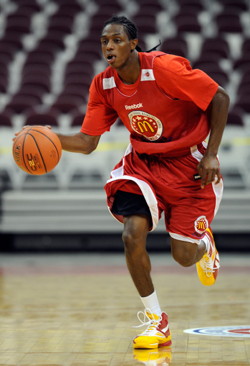 |
Despite the recent success, highly rated recruits and incoming recruiting classes is not unknown to Kentucky. If anything, UK teams are often defined by deep rosters filled with high school All-Americans, and while these players are typically called upon to blend into the team concept, many go on to earn All-Conference and collegiate All-American honors.
While Calipari appears to be stocking current Kentucky rosters with talent on par with the best the program has ever seen, when looking back at past UK rosters it will be difficult to match seasons past in terms of shear number of prep All-Americans. The reason being high turnover of players to the NBA. This is evidenced this past summer when five Kentucky players declared early and were drafted in the first round of the NBA draft.
(Note: For a full list of Kentucky players who have been named All-Amercian in high school, please consult this link.)
THE ALL-AMERICAN NAME GAME
Following the example of Walter Camp who started naming collegiate football All-Americans in the early part of the century, the naming of collegiate All-Americans in basketball was a popular pastime performed by numerous organizations. This practice has grown and been refined through the decades. In addition to the players named at the time, selections from the early half of the twentieth century were filled in retroactively by Bill Schroeder of the Helms Foundation. Schroeder's work allowed many early players to receive recognition they otherwise would never see.
Based on the services recognized by the NCAA, Kentucky has had fifty-two players named as a collegiate All-American in its history, beginning with Basil Hayden in 1921. It wasn't until after Adolph Rupp took over the head coach position did it become common for UK's roster to sport multiple All-Americans on their squads.
In contrast to college, the naming of All-American basketball players at the high school level is relatively sparse and done by fewer organizations. This was largely due to the vast number of schools and, other than state tournaments, a relative lack of opportunities to properly evaluate players from around the nation.
EARLY HIGH SCHOOL ALL-AMERICANS
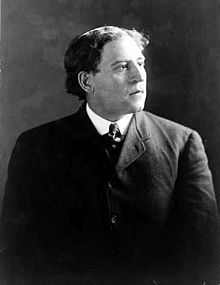 |
In 1922, the Lexington (Kentucky) High team made a splash by winning the Chicago tournament, led by James McFarland. According to information found by Ken Alexander, who has researched that team as part of his upcoming book The Boys of '22, The Team That Made Basketball Kentucky's Game, three of the Lexington players earned All-American recognition. McFarland was named to the first team while generally being acknowledged as the most outstanding player in the tournament while Len Tracy also received first team honors. Burgess Carey earned second team honors, and was singled out for his defensive work. Lovell Underwood also earned distinction for his work at the center position.
With the exception of Carey, who joined the group later after briefly attending Washington & Lee, the starting five (which included Will Milward) enrolled as a unit at the University of Kentucky, making them likely the first high school basketball All-Americans in the school's history.
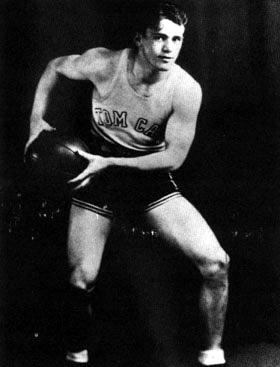 |
The Carr Creek story was one that made national headlines and intrigued the Chicago organizers, who invited both Ashland and Carr Creek to participate. Carr Creek made a good showing by winning three games, including against one of the tournament favorites, however they eventually succumbed to a highly regarded team from Vienna Georgia.
The Ashland Tomcats, meanwhile also advanced through the field to the final game, along the way taking a measure of revenge for their Kentucky brethren by beating Vienna. The Tomcats won the title over a squad from Canton Illinois. Ellis Johnson was unanimously named to the All-Tournament team by sportswriters, and later attended Kentucky where he also became a collegiate All-American.
Other future UK players who earned All-American honors at the Chicago tournament included Ellis Johnson's Ashland teammate Darrell Darby in 1928 and Dave Lawrence who led his Corinth Kentucky team to a third-place finish in 1930.
Unfortunately, the Chicago tournament ran into opposition from state associations and others who argued that participation was harmful to the athletes. Stagg, who was athletic director at the Chicago school, considered the tournament to be a great opportunity for development of young men.
"It was an educational experience which had tremendous values in future life. Many a youngster had never been away from his own home state before he came to Chicago as a member of his championship team, and the experience of meeting with boys from every part of the country in thoroughly supervised play and recreation was an opportunity which helped them in every way," Stagg was quoted in a Sports Review article published in 1960 as he reminisced about the tournament at the age of 97.
Despite working desperately to keep the tournament alive, Stagg could not turn back the tide of opinion working against it, including his own University that was in the process of deemphasizing their own sports programs. The final two tournaments for public schools occurred in 1929 and 1930, and saw the Athens (Texas) Hornets win consecutive titles on the backs of the Tompkins boys. In the final championship game in 1930, the Hornets beat the team from Jena Louisiana and their hotshot player Sparky Wade.
LOST YEARS & REBIRTH
With the end of the national tournaments (the Catholic event ended in 1941), the naming of high school All-Americans became neglected for many years. Even the state associations were decades away from naming Mr. Basketball's (state players of the year) although this handicap didn't completely shut out publicity of talented high school players.
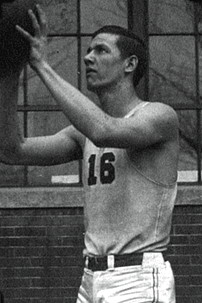 |
Beyond fleeting mention of the feat in some newspapers across the country, Jones did not receive any notable awards or recognition for his exploits. "I didn't receive any special award," said Jones recently. "There was all-state and all-region and all-county and that was about all there was." "Wah Wah" went on to join the University of Kentucky, where he starred in both basketball and football and was a member of the Fabulous Five and the 1948 Olympic team.
After the end of World War II the sport of basketball exploded in popularity. This increased interest resulted in the expansion of offseason events, both in the scholastic and collegiate ranks.
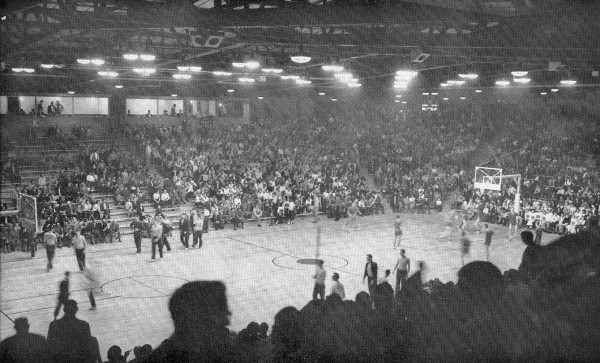
One popular event, which once again set the stage for the naming of high school All-Americans, was the North-South Classic begun in the summer of 1949. The event was held in Murray Kentucky and not only featured local talent but also brought together high school stars from all regions of the country including Bob Pettit, Tom Gola, Bevo Francis and Bailey Howell among others. The event also served to promote the Western Kentucky region as the players spent a week practicing and participating in sponsored extracurricular activities.
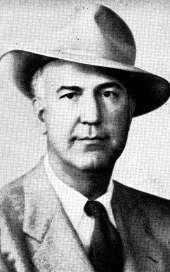 |
Numerous Kentucky players participated in the classic, including many who went on to attend UK. Future UK players named Chuck Taylor All-Americans included Gayle Rose of Paris, Jerry Bird of Corbin, Earl Adkins of Ashland and Vernon Hatton of Lexington. Rose and Adkins were named Players of the Year in 1950 and 1953 respectively by Taylor.
The Murray event ended in 1956 but while it lasted it proved to be an important harbinger of the future, not only in terms of recognition of individual high school players but in their recruitment. Taylor went on to be enshrined into the Naismith Basketball Hall of Fame in 1969, the same induction class as Kentucky head coach Adolph Rupp.
 |
PAPER CHAMPIONS
In the 1950s, two very different publications took up the challenge of naming high school All-Americans and the practice finally took root.
The first was Scholastic Coach Magazine which began naming thirty players for distinction in 1956 (later expanded to forty players) initially under the direction of Bob Lapidus and edited by Herman L. Masin. Scholastic Coach's picks were published throughout their family of magazines, including Junior and Senior Scholastic which reached millions of school-children.
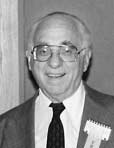
According to Bruce Weber, who worked at Scholastic Coach for forty-four years and was part of the selection process, naming deserving players involved a significant amount of legwork talking with recruiters, scouts and coaches such Chuck Daly and George Raveling. Much of the time was spent on the telephone and scouring newspapers. "We talked to coaches around the country," he said. "There was no internet, no film exchange, no video. It was a work-intense process."
The magazine continued picking players for many years. In 1985 Weber helped launch the Gatorade Player of the Year Award, which named a top player in each state and Washington D.C. along with naming a national player of the year. (Current Kentucky freshman Brandon Knight is a two-time winner of this national award.)
 |
The first year of the award three five-man teams were chosen, including future UK player Bobby Lee Slusher who was placed on the third team. Slusher had played at Lone Jack High School and went on to play varsity at UK one season before transferring. The five-man Parade team members were invited to New York City where they appeared on the Steve Allen Show. Parade reached a broad national audience and their choices became an important fixture among basketball fans in the country.
Notably, these publications achieved a milestone in that they were the first to consider all high school players, including black players, in their lists. This provided recognition and opened doors for many black athletes who in the past would not have received the same level of attention.
ALL-STAR GAMES
As the late 1960s and 1970s progressed, events outside of the traditional high school season became popular such as All-Star matches between states (Kentucky participated in events against Indiana and Tennessee) and regions of the country. Included in this were a number of all-star games and classics such as the Derby Festival Classic in Louisville, the Dapper Dan/Roundball Classic in Pittsburgh and the Capital Classic in Washington D.C. These events invited All-Stars from around the nation to play local All-Star teams and established themselves nationally.
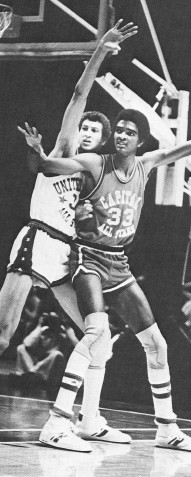
In 1977, McDonald's agreed to sponsor the Capitol Classic and in doing so named their first McDonald's All-Stars team, who faced players from the greater D.C. area. Following the idea of Bob Geoghan who had worked with the Capitol Classic, the game was expanded the following year to include national players on both sides.
An advisory committee was created to choose the players, and their credibility was boosted considerably by the addition of high school coaching legend Morgan Wooten of DeMatha (MD) Catholic and John Wooden, late of UCLA.
The first true McDonald's All-American game took place in Philadelphia at the Spectrum in 1978. This game featured All-Americans on both teams (although they typically did maintain some regional flavor by inviting at least one local player to participate) and the location was moved to different venues each year. Future Kentucky players on that team included phenom Dwight Anderson of Dayton Ohio, Chuck Verderber of Lincoln Illinois and Philadelphia native Clarence Tillman.
 |
Unfortunately for the event organizers and fans alike, instead of participating in the game where he was scheduled to play on the same team as Sampson, Bowie chose to attend the NCAA Final Four at the invitation of a group which had named him player of the year. Bowie and Sampson would face each other in subsequent all-star events.
A week after the McDonald's game, Bowie announced his decision to attend UK where he joined with fellow McDonald's All-Americans Dirk Minniefield of Lexington and Derrick Hord of Bristol Tennessee among others in the Wildcat recruiting class. A month later, Sampson narrowed his college choice down to Kentucky and Virginia before choosing the Cavaliers in a controversial news conference.
With the addition of a national All-Star game to the paper teams that had previously become the standard, the McDonald's event soon became the premier high school honor and showcase of prep talent in the country.
KENTUCKY'S BOUNTY
Kentucky's coaches have signed and featured numerous Parade and McDonald's All-Americans on their rosters over the years. (see links)
Under Adolph Rupp, who retired after the 1972 season, the numbers don't accurately reflect his overall success given the lack of a reliable source of high school All-Americans for much of his career. Even considering only the time period after Parade began naming players, it is still misleading given the relatively small number of players chosen at the time and the fact that the freshman rule was in effect. This rule prevents high school All-Americans from being counted until they became sophomores when they joined the varsity.
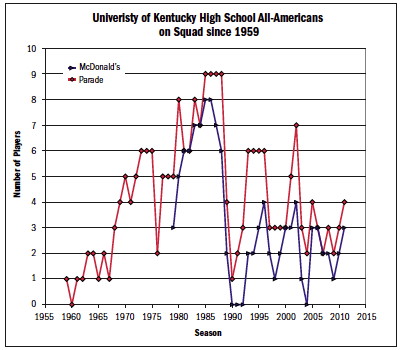 |
When Joe Hall became head coach he took recruiting to new heights, with one result being a National Championship in 1978. By the time Hall retired in 1985 and the program was handed over to Eddie Sutton, Kentucky boasted nine Parade All-Americans (eight of whom were also McDonald's All-Americans) on its squad.
With probation in the late 1980s, the bottom fell out as highly rated players seemed to vanish. But new coach Rick Pitino quickly rebuilt the roster with talented players and eventually developed a deep bench. Pitino's work established a foundation of success for the program in the 1990s resulting in a national championship in 1996 followed by another in 1998 under the direction of Orlando "Tubby" Smith. Even then, the toll of early entry into the NBA cut into the numbers and made the idea of stocking multiple high school All-Americans on one roster an elusive goal.
Tubby Smith's deepest team (at least on paper) turned out to be in 2002, which sported seven Parade All-Americans (four McDonald's). This team became known as "Team Turmoil" as they severely underperformed as the season progressed. Subsequent Smith teams held highly regarded high school talent, but did not reach those same levels of depth in terms of high school talent, nor did those of his successor Billy Gillispie.
LOOKING FORWARD
Alongside the continued work of McDonald's and Parade Magazine has grown a slew of other media outlets and publications, from USA Today which began naming their own High School All-American team in 1983, to Street & Smith's yearbook among others too numerous to mention.
More recently websites such as Scout.com and Rivals.com have introduced the concept of star ratings to grade top recruits while new All-Star events such as the Jordan Brand Classic and the internationally-inclusive Nike Hoop Summit have allowed other players, such as UK freshman Enes Kanter and originally of Turkey, to make a name for himself.
Although it hasn't always been this way, the tradition of naming prep All-Americans promises to continue to grow in the future. If history is any guide, Kentucky will remain in the thick of it for years to come.
 |
Return to Kentucky Basketball page, Kentucky articles, statistics, team schedules, team rosters, opponents, players, coaches, opposing coaches, games, assistance or search this site.